 Go directly to content




Delivering impact, together
We recognise the value in employing effective market mechanisms to drive social and environmental change in aquaculture.
We achieve this by evaluating and communicating the impacts of our rigorous certification programme, bound by science-based standards, effective assurance mechanisms and a robust governance system.
Information collected across our programs allows us to monitor our progress and demonstrate change in transforming seafood farming.
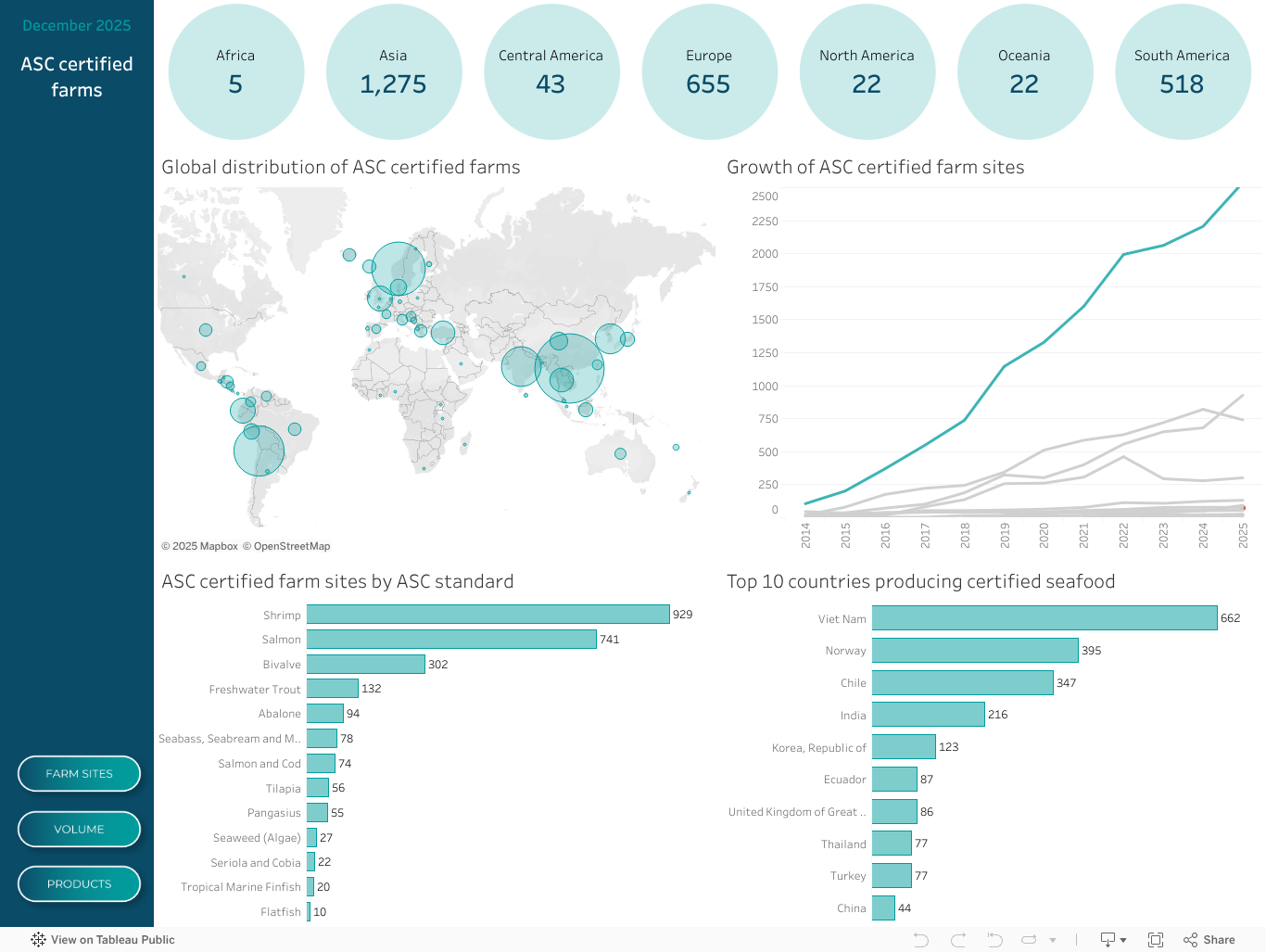
ASC Impact Tracker
Data gathered by ASC is used to quantify programme impacts, to drive future improvements to the ASC standards and to support us in championing change through our collaborations and partnership.
Dive into our Impacts Tracker to learn more about the growth of the programme.
Measuring our Impact
ASC recognizes that through the promotion and reward of responsible farming practices and influencing the choices people make when buying seafood, we can transform seafood farming towards environmental sustainability and social responsibility.
The impact of our programmes on the seafood farming industry is substantiated across multiple SDGs with a clear focus on six. Beyond our programmes, ASC meets SDG 17 through targeted collaborations and partnerships to drive the positive transformation of the industry.

Monitoring & Evalutation
ASC’s Monitoring and Evaluation (M&E) system has been designed to demonstrate the transformation of aquaculture towards environmental and social responsibility and measure the impacts of responsible farming practices and increased demand for ASC certification.
The ASC M&E System is communicated through:
and ASC M&E Framework – Appendix A
For more information on M&E at ASC, contact Jill Swasey, Head of Monitoring and Evaluation: Contact
Theory of Change
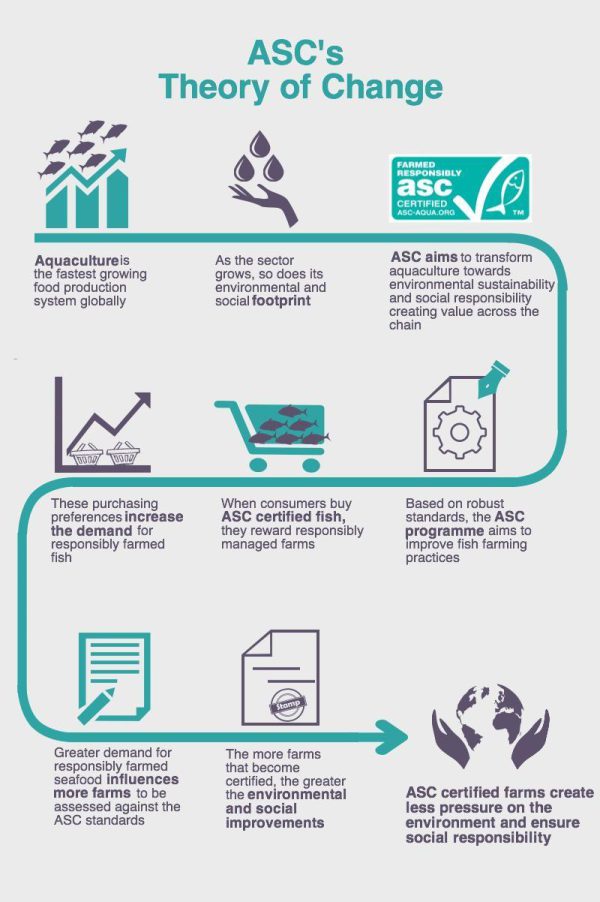
ASC certified seafood is raised to meet the highest standards for environmentally and socially responsible practices. ASC traceability controls ensure the provenance of certified farmed seafood.
ASC acts in the marketplace to increase the awareness, value, demand, and distribution of ASC certified seafood. As demand grows, there is an incentive for producers to pursue the recognition and reward that ASC certification offers. As more producers achieve certification, more seafood is farmed responsibly.
This process leads to an aquaculture system that produces more fish for more people with the most responsible environmental stewardship and social responsibility.
Learn more about the ASC Theory of Change
Data Sharing Policy
ASC uses collected data to understand where responsible aquaculture is happening, to show our positive impact, and to keep improving our work. All data are managed in accordance with our privacy standards, and confidential information is not disclosed. Learn more in the ASC Data Sharing Policy.
 ASC on the Map
 ASC Impact Report 2024
 Farmers stories